Christmas Shape Tracing Activity Sheets for Young Learners
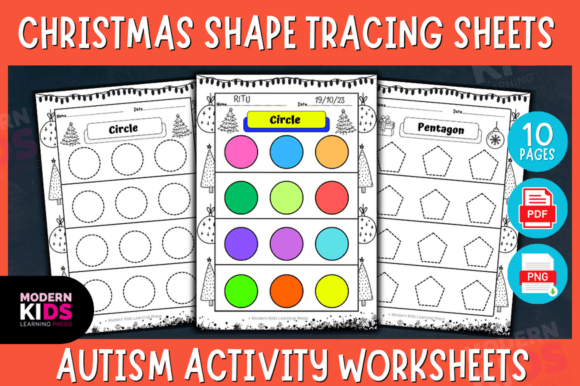
Christmas Shape Tracing Activity Sheets are educational tools designed to introduce young children to basic shapes while incorporating festive holiday themes. These worksheets provide a fun and engaging way for learners, especially those with autism, to practice fine motor skills, hand-eye coordination, and shape recognition. By combining learning with the joy of the holiday season, these activity sheets offer an accessible and interactive approach to early childhood education.
Parents, educators, and therapists may be interested in Christmas Shape Tracing Activity Sheets for several reasons. They can serve as a valuable supplement to traditional learning methods, particularly for children who benefit from visual and sensory-based activities. The holiday theme makes the learning process more enjoyable, which can increase engagement and motivation. Additionally, these sheets can be used in both structured and unstructured learning environments, such as classrooms, therapy sessions, or at home.
One of the primary benefits of these activity sheets is their ability to support the development of fine motor skills. Tracing shapes requires controlled hand movements, which helps improve dexterity and prepares children for writing tasks. The repetitive nature of tracing also reinforces memory and pattern recognition. However, it is important to consider that some children may find the activity challenging if they have limited fine motor control or attention span. In such cases, additional support or modifications may be necessary.
The festive illustrations on these worksheets play a crucial role in making the learning experience more appealing. Bright colors, familiar holiday symbols, and playful designs create a positive association with learning. This can be especially beneficial for children with autism, who often respond well to structured and visually stimulating materials. However, the level of detail in the illustrations should be considered—too much complexity may overwhelm some learners, so it is important to choose worksheets that match the child's developmental stage and preferences.
Customization is another key feature of these activity sheets. Educators and parents can adjust the difficulty level, modify the shapes included, or incorporate specific patterns based on the learner’s needs. This flexibility ensures that each child can participate at their own pace and achieve success through tailored activities. However, customization may require time and effort, which could be a consideration for those looking for ready-to-use resources.
Christmas Shape Tracing Activity Sheets are particularly well-suited for children who are just beginning to develop their fine motor skills and shape recognition abilities. They are ideal for use in early childhood education settings, including preschools, special education programs, and home-based learning environments. These sheets are also beneficial for children with autism, as they provide structure, repetition, and sensory input that aligns with their learning preferences.
However, there may be situations where alternative activities are more appropriate. For example, children who struggle with pencil grip or have significant motor delays may benefit more from activities that focus on strengthening hand muscles, such as using tweezers or playing with playdough. Similarly, children who prefer more dynamic or movement-based learning may find tracing sheets less engaging compared to hands-on activities like building with blocks or sorting objects by shape.
When considering whether to use Christmas Shape Tracing Activity Sheets, it is important to evaluate the child’s individual needs, interests, and learning goals. Parents and educators should also consider how well the worksheets align with the child’s current developmental level and whether any modifications are needed to ensure success. It may also be helpful to combine these sheets with other activities that reinforce shape recognition in different ways, such as sorting games or shape scavenger hunts.
In conclusion, Christmas Shape Tracing Activity Sheets offer a practical and festive way to introduce young learners to shapes while supporting the development of essential motor skills. While they may not be suitable for every child, they can be a valuable addition to a well-rounded learning plan for many. By carefully considering the child’s needs and preferences, parents and educators can determine whether these sheets are the right fit for their learning goals.